🔗 The White House (YouTube): Watch the Religious Liberty Address
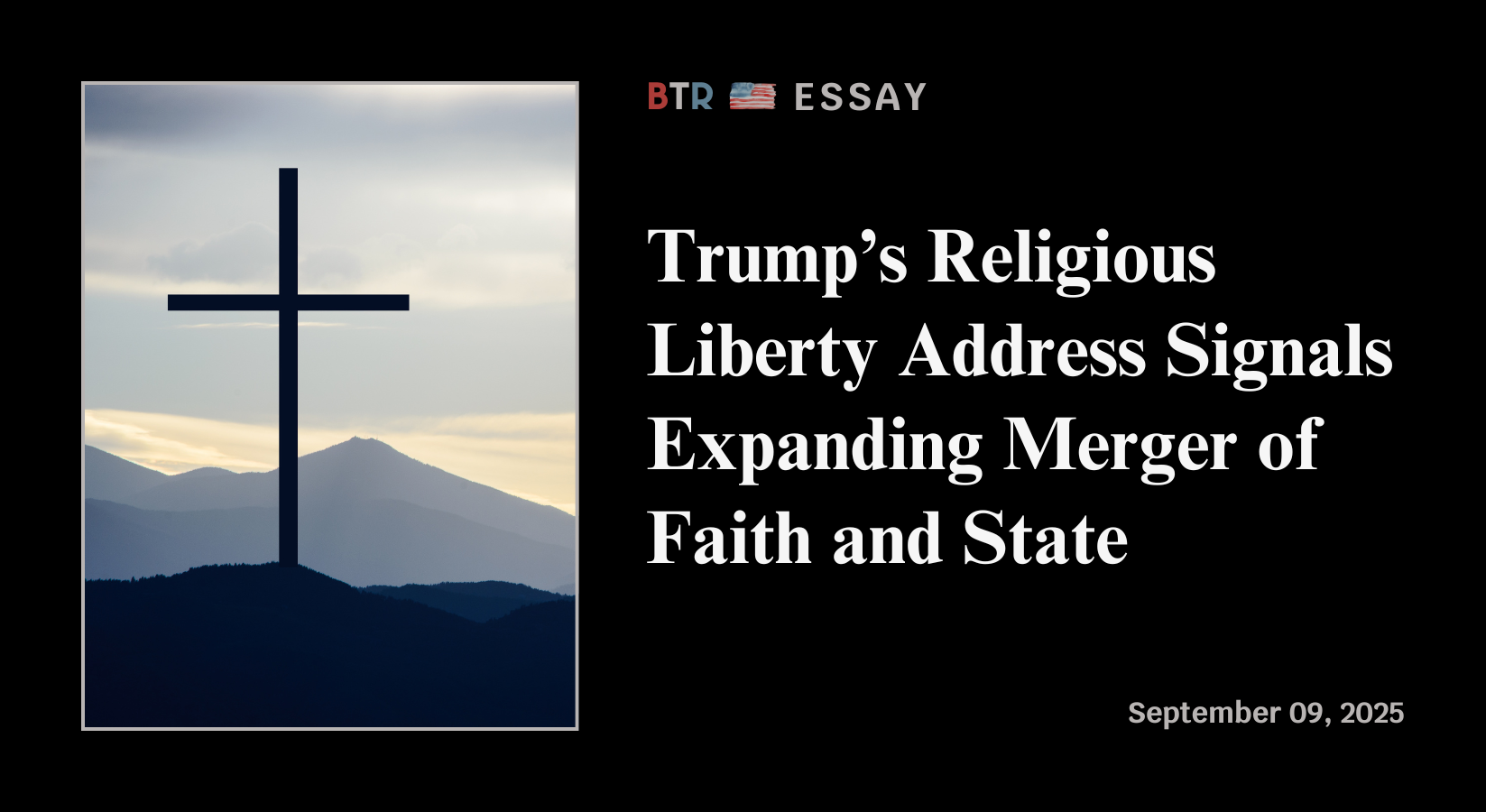
At the Museum of the Bible in Washington, President Donald Trump delivered a sweeping address to the White House Religious Liberties Committee that combined patriotic imagery, personal anecdotes, and policy pledges. The event was framed as a defense of the First Amendment, but the rhetoric and initiatives outlined by the president signaled a broader effort to intertwine faith with governance. Surrounded by pastors, cabinet officials, conservative activists, and media personalities, Trump portrayed himself as a defender of Christians, Jews, and what he repeatedly called the “Judeo-Christian principles” on which he claimed the nation was founded.
Central to the address was the promise of new federal guidance on student prayer in public schools. Trump pledged “total protection” for young people who wish to express their religious beliefs, citing stories of children disciplined for praying or refusing to participate in lessons on gender identity. While voluntary student prayer is already protected under the First Amendment, the framing of this new guidance suggests a shift toward government endorsement of religious practice in classrooms. Critics warn that such a move risks creating coercive environments for students of minority faiths or those with no faith, undermining the principle of religious neutrality in public education.
Trump also emphasized his administration’s redefinition of federal sex recognition to “male and female” only, a move that has sparked lawsuits and criticism from human rights organizations. He presented this policy as common sense and claimed it restored fairness in athletics and protected children from what he called “transgender insanity.” By announcing that federal funds would be tied to compliance with this definition, the administration is not only enforcing its cultural agenda but also reshaping civil rights enforcement in education, healthcare, and beyond. For supporters, these measures are seen as a victory for traditional values. For opponents, they represent government intrusion into personal identity and medical care.
Universities were singled out as targets for reform. Trump highlighted an “unprecedented” $200 million settlement with Columbia University, describing it as punishment for civil rights and antisemitism violations. Columbia has confirmed the settlement but emphasized that it restores access to federal research funding and allows the institution to move forward. The president’s framing of the case, however, points to a larger pattern in which federal funding is wielded as a tool to pressure institutions that are portrayed as hostile to conservative priorities. In this way, cultural battles are being enforced through financial leverage rather than democratic debate.
The president also celebrated his efforts to diminish the Johnson Amendment, which since 1954 has limited political endorsements by churches and other nonprofit organizations. He declared that he had “gotten rid of it,” even though the law remains in place. Enforcement, however, has been significantly narrowed, creating a chilling gray area where pastors may feel freer to engage in open political advocacy. Trump used this as evidence that he had restored the voices of faith leaders who he claimed had been silenced for decades.
Crime and public safety were woven into the address as evidence of his broader vision. Trump described Washington, D.C. as a “totally safe zone,” boasting of a ninety percent reduction in crime since his administration’s federal interventions. While official data do show meaningful declines in violent crime this year, the city is far from crime-free, with hundreds of violent incidents and thousands of property crimes still reported. The president’s exaggerated claim illustrates a familiar pattern in his speeches, where statistical improvements are framed as total victories in order to reinforce the image of decisive leadership.
International observers are paying close attention to these developments. Human rights organizations have warned that policies restricting recognition of gender diversity and expanding government support for public prayer risk violating protections for minority groups and eroding democratic norms. The United Nations has emphasized that gender-based discrimination cannot be ignored and has urged member states, including the United States, to uphold inclusive standards. Commentators abroad view the religious rhetoric and exclusionary policies as aligning the United States more closely with nationalist movements in other countries that fuse state power with religious identity.
For Trump’s base, the address was evidence that he is delivering on long-standing promises to elevate religion in public life and push back against cultural change. For moderate supporters, the combination of patriotic themes, religious symbolism, and pledges of safety offered reassurance of stability, though some may be uneasy about the harshest edges of policy. For critics, the speech revealed the dangers of allowing one religious worldview to dominate government action. By linking faith, public funding, and executive authority, the president is reshaping the civic environment in ways that challenge both pluralism and constitutional boundaries.
The setting itself reinforced the message. Speaking from the Museum of the Bible, Trump placed his personal story, his family’s Bible, and the memory of America’s founding documents into a single narrative that cast his presidency as a continuation of divine purpose. By surrounding himself with prominent pastors, activists, and cabinet members, he presented a coalition in which state and religious leaders stand together as guardians of national renewal.
Trump concluded by declaring that the United States was entering a “golden age” of faith and unity, promising that the next year would be marked by prayer, celebration, and restoration of national greatness. Whether this vision represents a renewal of liberty or a narrowing of it depends on how the courts, legislatures, and the broader public respond. What is clear is that the president’s address marked another step toward blending state authority with sectarian identity, raising fundamental questions about the future of democracy and pluralism in America.